A school can have classrooms, teachers, books and students eager to learn. But when the water children drink during the school day isn’t safe, everything else becomes more difficult.
For millions of students around the world, access to water isn’t necessarily the problem. Water may already be available at their school. The problem is whether that water is safe to drink.
That distinction is at the heart of the work of Purify Project, a nonprofit founded in Des Moines, Iowa, that provides water purification systems to schools in Tanzania.
Our approach begins with a simple idea: when children have safe water at school, they have a better opportunity to stay healthy, stay in the classroom and learn.
In many communities, the challenge isn’t simply whether water exists. A school may have access to a well, borehole, storage tank or another local water source. But having water and having safe drinking water are two very different things.
Water can become contaminated by bacteria, parasites and other microorganisms capable of causing illness. For children, the consequences can extend well beyond an upset stomach. Waterborne illness can mean missed classes, lost learning time and additional burdens for families already facing limited access to healthcare.
That’s why Purify Project focuses on water purification.
Rather than assuming a new well is always the answer, Purify Project works with schools where water may already be available but isn’t reliably safe to drink. The goal is straightforward: take the water a school already has and make it safer for students to consume.
That approach allows a single purification system to serve an entire school community every day.
The scale of the challenge is enormous.
According to the World Health Organization and UNICEF, 447 million children worldwide lacked a basic drinking water service at their school in 2023. In sub-Saharan Africa, fewer than half of schools had a basic drinking water service.
And the consequences of unsafe water reach far beyond thirst.
The World Health Organization reports that contaminated drinking water can transmit diseases including diarrhea, cholera, dysentery, typhoid and polio. Globally, at least 1.7 billion people use a drinking-water source contaminated with feces, and microbiologically contaminated drinking water is estimated to cause approximately 505,000 diarrheal deaths each year.
For a child, illness can mean more than a trip to the doctor. It can mean missing school, falling behind in class and losing opportunities to learn. WHO specifically notes that improved water sources can lead to better health and better school attendance for children.
That’s why a water project at a school isn’t simply an infrastructure project.
It’s an education project, too.
Purify Project’s work is concentrated in schools for a reason.
A school provides an opportunity to reach hundreds — and sometimes thousands — of children through a single installation. Instead of asking students to change where they live or where their families obtain water, Purify Project works to make safe drinking water available in a place children already gather every day.
The model grew from an experience that began thousands of miles away in Des Moines.
In 2012, Monsignor Frank Bognanno traveled to Tanzania as part of a Mount Kilimanjaro expedition with Dr. Richard Deming and Above + Beyond Cancer. During that trip, Monsignor Frank met with a local bishop and asked a remarkably simple question:
What do you need?
The answer was water.
What Monsignor Frank saw in Tanzania ultimately led him back to Iowa with an idea: find a practical way to help schools provide safer drinking water to their students.
That idea became Purify Project.
Purify Project isn’t a well-drilling organization.
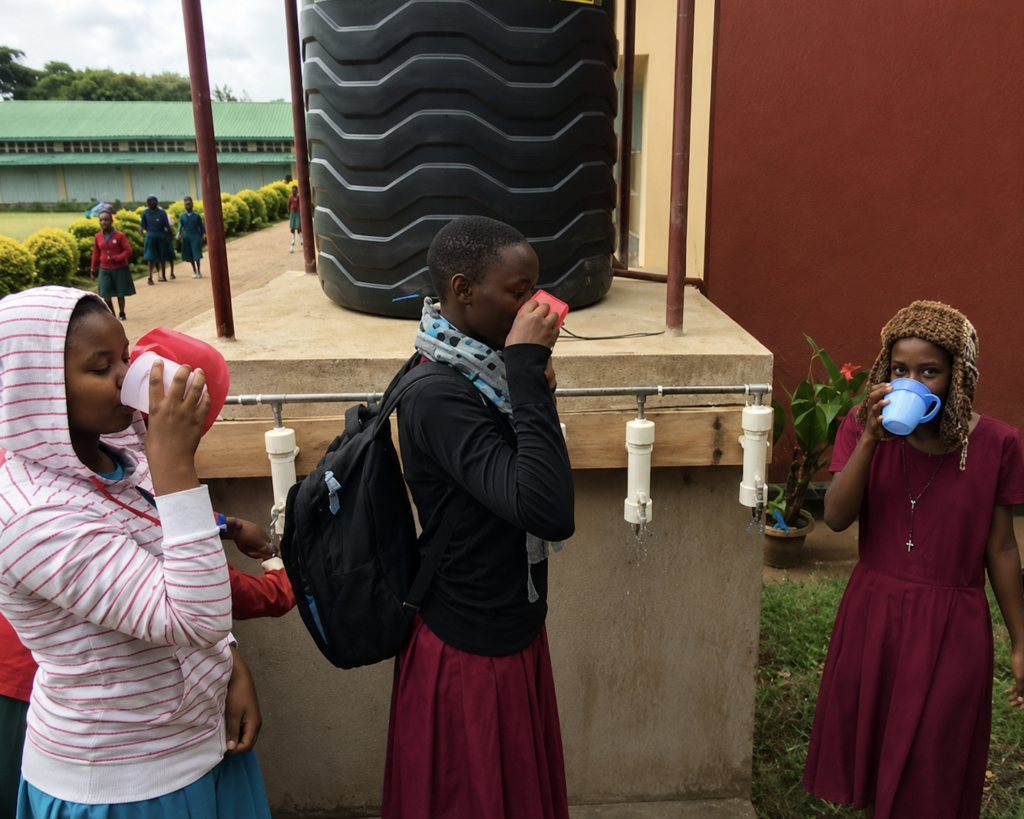
In many of the schools Purify Project serves, water already exists. The challenge is making that water safe to drink.
Instead of beginning with the assumption that a new water source must be created, Purify Project begins by looking at the water a school already has. Water can be tested to better understand the contaminants present, and a purification system can then be designed to address the school’s specific needs.
That distinction matters.
Drilling a new well can provide access to water, but access alone doesn’t guarantee that water is safe. Purification focuses on the quality of the water students actually drink.
For Purify Project, the objective isn’t simply to bring water to a school.
It’s to help make the water already there safe for the children who depend on it.
What began with a simple question in Tanzania has grown into a model reaching school communities across the country.
Today, Purify Project has installed water purification systems in 66 school systems in Tanzania, helping make safe drinking water available to thousands of students.
The school-based model allows each installation to have an outsized impact. A single purification system isn’t serving one child or one family. It can provide clean drinking water for hundreds — and in some cases thousands — of students who pass through a school every day.
And the impact continues long after an installation is complete.
Purify Project’s work includes testing water, installing purification equipment and helping create a sustainable source of safe drinking water within the school community. The organization has also expanded its work in Tanzania to include water-testing capabilities, helping better understand the quality of the water being consumed in the communities it serves.
The economics can be surprisingly powerful.
Just $7 can help provide safe drinking water for 1,000 students for an entire month.
That’s less than a penny per student.
But behind that number are real children walking into classrooms every morning — children who deserve to spend their school day thinking about what they’re learning, not whether the water they’re drinking will make them sick.
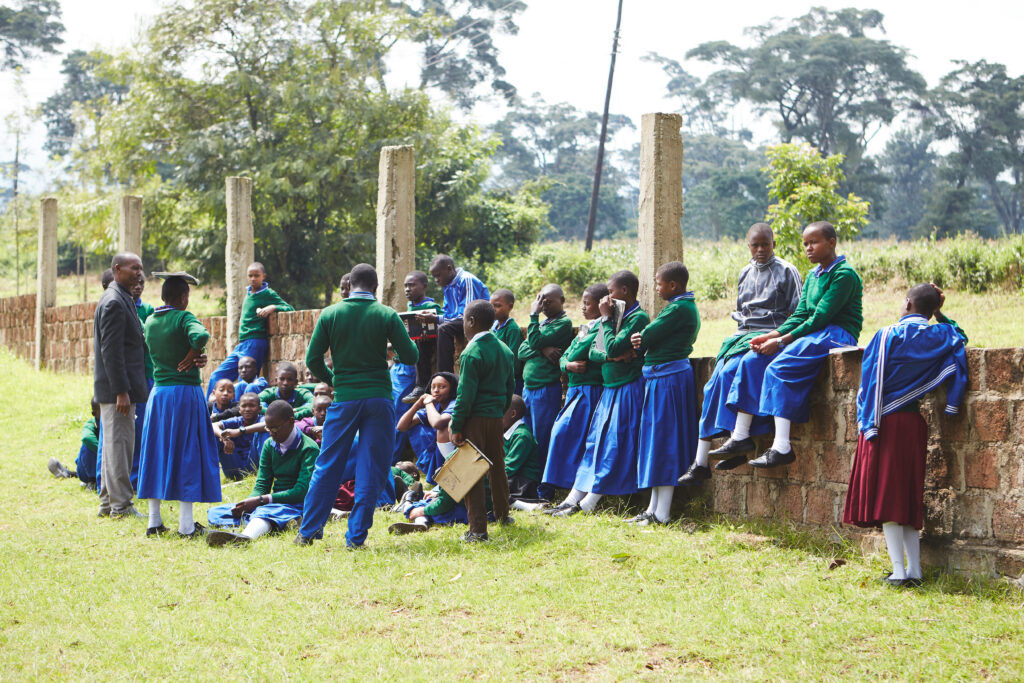
Students at a school community served by Purify Project in Tanzania.Clean water does more than satisfy thirst.
For a student, access to safe drinking water can mean one less obstacle standing between them and an education.
When children become sick, they miss class. When illness happens repeatedly, those missed days add up. And in communities where families may already face significant barriers to education and healthcare, something as fundamental as the water available at school can have consequences far beyond the school day.
That’s why Purify Project sees clean water and education as deeply connected.
A purification system doesn’t teach a lesson, provide a textbook or build a classroom. But it helps create something every student needs before any of those things can matter:
The opportunity to be there.
To sit in the classroom.
To learn.
To grow.
And ultimately, to build a future.
Although Purify Project’s work takes place thousands of miles away, its roots are firmly planted in Des Moines, Iowa.
After returning from Tanzania, Monsignor Frank Bognanno brought the problem home with him. What he had witnessed wasn’t something he could simply leave behind.
From that experience grew a Des Moines-based nonprofit built around a straightforward belief: people here in Iowa can make a meaningful difference in the lives of children half a world away.
Today, Monsignor Frank is joined in that mission by a board of Iowa community and business leaders including Ted Corrigan, former CEO and General Manager of Des Moines Water Works; Eddie Mauro; Kate Coppola; and Earl Harper.
They are supported by donors, volunteers, businesses and friends who have helped turn an idea born from one trip to Tanzania into an organization now serving school communities across the country.
Purify Project may work globally.
But this is an Iowa story.
It’s a story about what can happen when people see a problem, decide it matters and refuse to believe that being thousands of miles away means they can’t do something about it.
Every purification system installed represents progress.
It also represents another school that shows what is possible.
There are still students who begin their school day without knowing whether the water available to them is safe to drink. There are still schools where something most of us in Iowa rarely have to think about can become an obstacle to health, attendance and education.
So Purify Project’s work continues — one school, one purification system and one cup of clean water at a time.
And sometimes, making a difference can begin with something remarkably small.
$7 can help provide safe drinking water for 1,000 students for an entire month.
Learn more about Purify Project, make a gift, volunteer or discover other ways to get involved.